

Italy is not a country that produces wine.It is a country that lives within wine.The vine follows the peninsula like an invisible line that crosses mountains, flows through hills, touches plains, and reaches the sea. It changes form, rhythm, and voice, but it never disappears.This continuity, fragmented yet profound, is what makes Italian wine unlike any other wine narrative in the world.
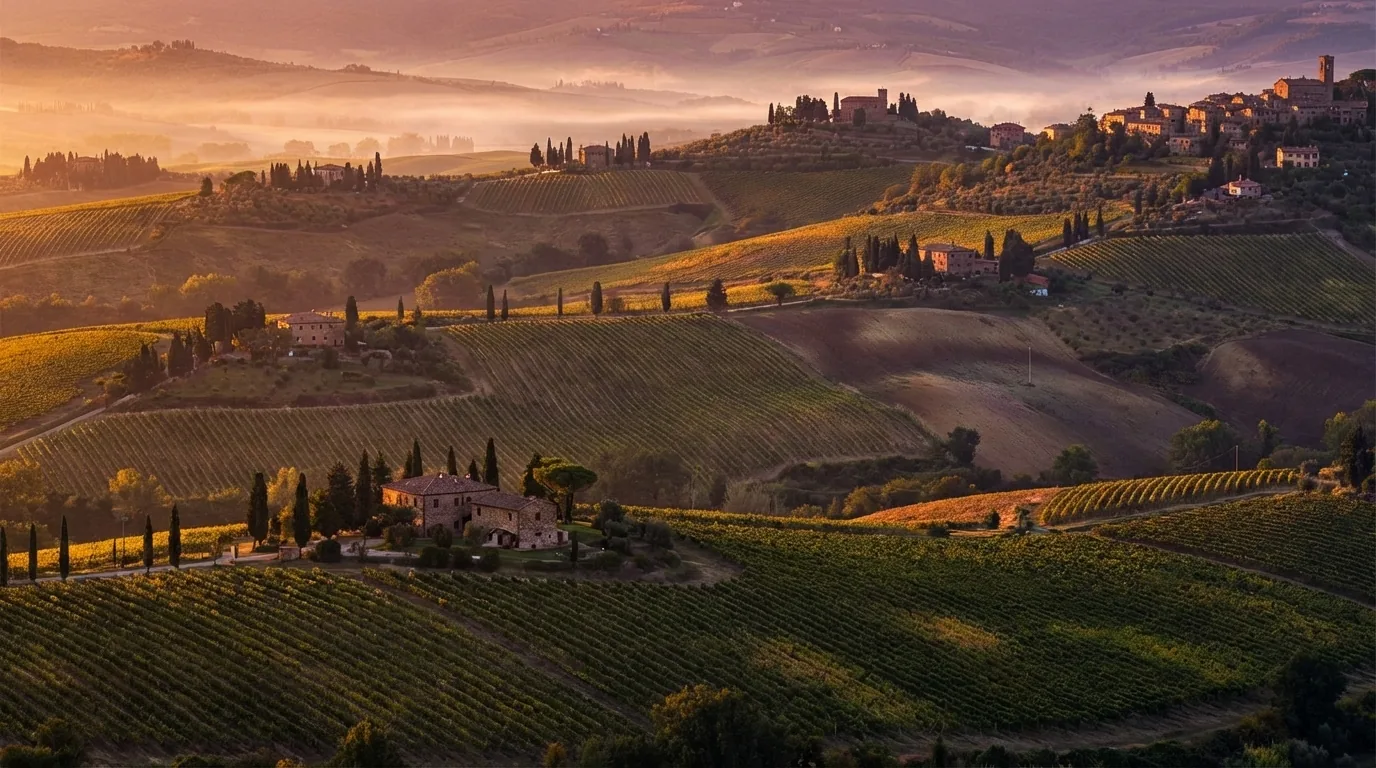
Here, wine is not born from an abstract idea, but froman ancient relationship with place.Each territory has learned, over time, to dialogue with the vine according to its own conditions. Light that shifts from slope to slope, wind that cools or dries, altitude that slows ripening, scarcity or abundance that forces the plant to find balance.There is no single model, because there is no single Italy.There are many Italies, often just kilometers apart, each with a distinct character.
The strength of Italian wine lies precisely inthis lack of uniformity.In other countries, wine followed a path of synthesis, seeking a recognizable and repeatable style. In Italy, it followed the opposite path.It preserved difference.It accepted that each valley would speak its own language, that each hillside would find a different balance, that each grape variety would slowly adapt to its context.
This is why Italian wine is never completely immediate.It asks for attention, because it carries layers of history, agricultural gestures, and everyday habits. It was not built to impress, but to accompany. It grew alongside cuisine, the table, and the rhythm of the seasons.This shaped its character.Wines meant to last, to evolve, to change over time together with those who drink them.
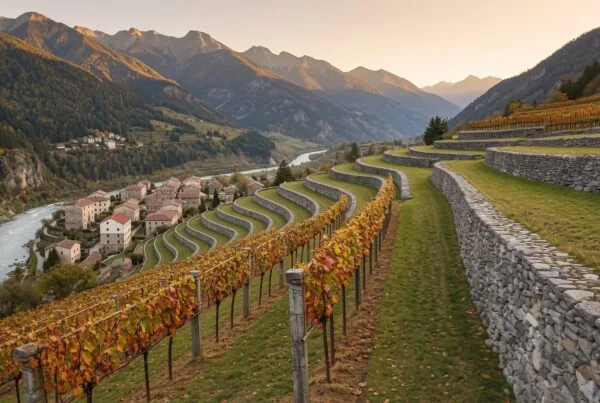
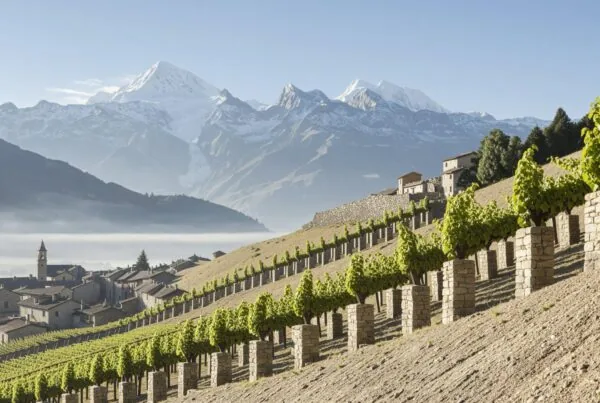
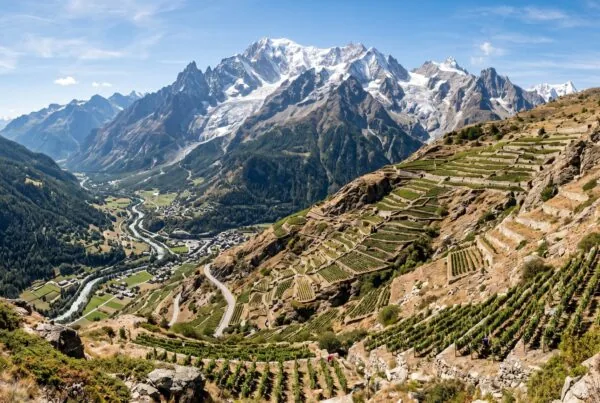
The vine in Italy has never been confined to a few districts.It is everywhere.From Alpine slopes to remote islands, from volcanic soils to clay hills, from limestone to coastal sands. This widespread presence allowed the creation ofa grape heritage unique in the world, often tied to very small areas and preserved by generations who observed, adjusted, and passed it on.
It is a slow knowledge, not originally written down. A knowledge built throughexperience, repetition, and correction.Only later did it feel the need for rules, names, and boundaries. Not to limit, but to protect.
Even today, despite changes in climate and markets, Italian wine remainsa child of place before technique.It adapts and evolves, but never abandons its identity. It isa living mosaic, not a static museum.A collection of stories that do not seek to resemble one another, but to remain faithful to themselves.
To tell the story of Italian wine is to accept complexity. To enter a narrative made of differences, nuances, and territories that resist simplification. Because in Italy,every wine is a declaration of belonging.And every bottle is a fragment of landscape that has learned how to speak.
Italian Denominations: Naming Place Without Judging Quality
DOCG, DOC and IGT: Giving Names to Places
At a certain point in its history, Italian wine felt the need for rules. Not to standardize, but to protect differences.This is how denominations were born.Tools designed to explicitly connect wine to its place of origin.
DOCG and DOCdefine precise areas, permitted grape varieties, yields, and production practices. They were created to protect historic names and prevent wines from being produced anywhere without a link to the place that made them recognizable. DOCG, in particular, introduces stricter controls and more detailed regulations,but it does not automatically guarantee a better wine.
Alongside these denominations existsIGT, created to offer greater expressive freedom. Indicazione Geografica Tipica maintains a link to place while allowing producers more flexibility to experiment with grapes, styles, and interpretations.Many important wines were born within this category, when territories needed new ways to speak.
One point must be made clear.Denomination does not equal absolute quality.DOCG, DOC, or IGT do not measure how good a wine is in the glass. They describe how it was produced, under which rules, within which geographic area.
Quality is born elsewhere. In the choices of the grower, in vineyard care, in the sensitivity with which a territory is interpreted.Denominations are maps, not judgments.They help us orient ourselves, but they do not replace listening to the wine itself.
In this sense, the Italian denomination system is not a hierarchy, buta language.A way of naming places and remembering that before style or market, wine is alwaysthe child of a land.