

Two cultures, one mountain
Travelling even further north, the landscape changes once again.
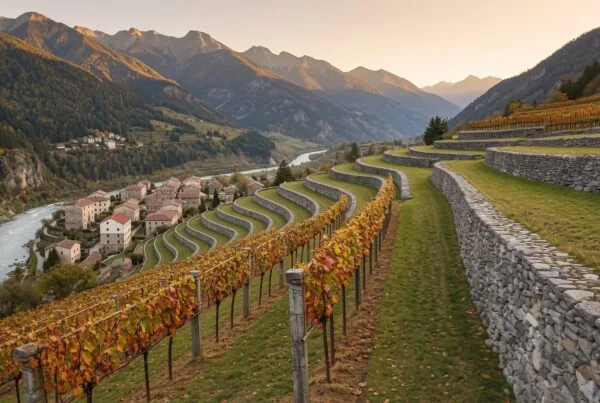
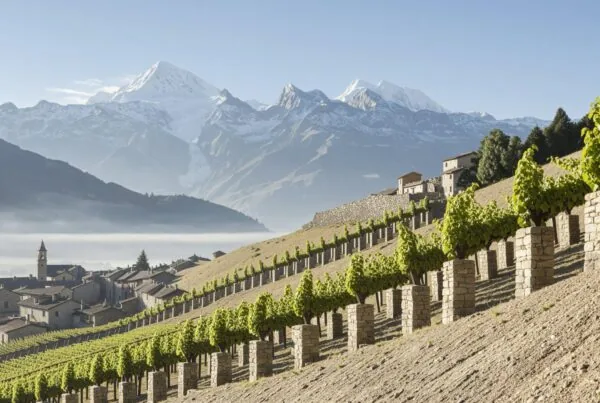
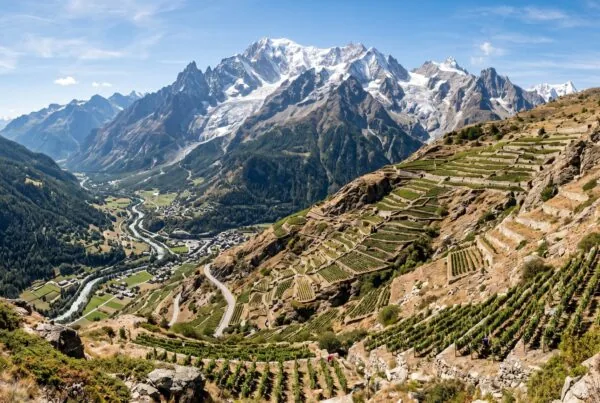
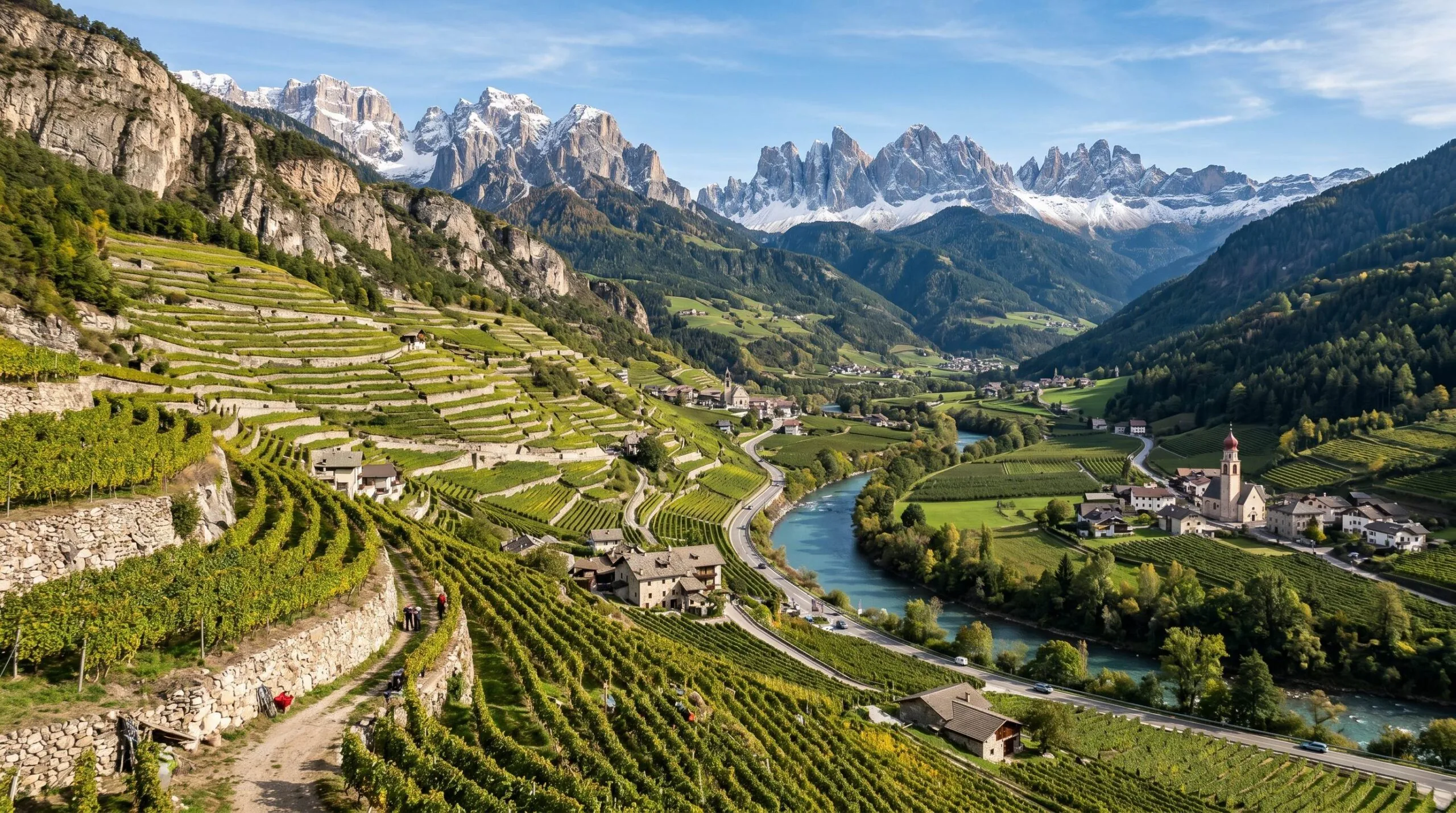
The hills gradually give way to mountains. Vineyards begin to climb the slopes, following the course of the Adige River and its tributaries through a region where every metre of elevation influences the climate, the light and, ultimately, the character of the wine.
Trentino-Alto Adige is one of Italy’s most fascinating wine regions, but also one of its most complex.
Here, two profoundly different identities coexist.
Trentino, with its Italian heritage, has historically looked south toward the Po Valley and the Mediterranean.
Alto Adige, or Südtirol, preserves a distinctly Central European soul, where the German language, architecture, traditions and even the philosophy of winemaking tell a different story.
Two cultures.
Two sensibilities.
One mountain.
It is precisely this diversity that makes the region unique.
Wine becomes the meeting point between different worlds, combining Alpine precision with Italian elegance in a style that is unmistakably tied to its land.
Vineyards stretch from around 200 to well over 1,000 metres above sea level, often on steep slopes where mechanisation is simply impossible. Every vineyard represents a delicate balance between altitude, exposure and nature.
In the following articles, we will explore this region by following the course of its valleys.
We will discover Alto Adige DOC, Valle Isarco, Oltradige, Bassa Atesina, Trentino and Trento DOC.
Because here, more than anywhere else, wine changes together with the mountain.
Mountain Viticulture
When altitude becomes elegance
In many Italian wine regions, the vine searches for sunlight.
Here, it also searches for altitude.
Growing vines in the mountains means working with steep slopes, shorter growing seasons and dramatic day-to-night temperature swings that can exceed twenty degrees.
It is precisely these temperature differences that allow the grapes to ripen slowly while preserving acidity, aromatic purity and remarkable precision.
Every metre of elevation changes the wine.
The light changes.
The wind changes.
The number of sunlight hours changes.
Even the harvest date changes.
For this reason, it is not unusual in Trentino-Alto Adige to find vineyards planted at very different elevations, each capable of expressing the same grape variety in a unique way.
The mountains impose a slower rhythm.
Much of the work must still be carried out by hand.
Mechanisation is often impossible, and every row of vines demands constant attention.
This is a form of viticulture built on patience.
On balance.
And on respect.
Because here, it is not man who conquers the mountain.
It is the mountain that teaches man how to grow vines.
Alpine Varieties
Grapes that found their home in the mountains
Every wine region chooses its protagonists.
In Trentino-Alto Adige, it almost seems as though the protagonists chose the region instead.
Several international grape varieties have found some of their finest expressions here. Pinot Bianco, Pinot Nero, Chardonnay and Sauvignon Blanc stand out for their precision, freshness and their remarkable ability to express altitude.
Alongside them thrive varieties that embody the region’s deepest identity.
Gewürztraminer, originating from the village of Tramin (Termeno), has become one of the world’s most recognisable aromatic wines.
Lagrein represents the richer, more structured side of Alto Adige, producing wines of depth while always retaining vibrant freshness.
Schiava, for centuries the region’s most widely planted grape, continues to surprise with its elegance and drinkability, while Teroldego remains the undisputed symbol of the Piana Rotaliana and of Trentino.
At higher elevations, varieties such as Kerner, Sylvaner, Müller-Thurgau and Riesling flourish, expressing the remarkable freshness and verticality that only mountain vineyards can offer.
Here, grape varieties do more than describe a place.
They tell the story of an ongoing dialogue between climate, altitude and culture.
And it is precisely this balance that makes Trentino-Alto Adige one of Europe’s most fascinating wine landscapes.