


Wine as Cultural Geography
Wine Around the World: A Map to Find Our Way
Imagine looking at the planet from above, slowly. Continents emerging from the oceans, mountain ranges tracing natural borders, climatic bands wrapping the Earth like invisible lines. Follow those lines carefully and one thing becomes clear.Wine does not grow everywhere.The vine needs balance. Light, seasons, time. That is why wine, before being a drink, isa cultural geography.
The story of wine does not begin with a plan, but with observation. The earliest forms of wild grapevine grew naturally in a very specific part of the world,between the southern Caucasus, eastern Anatolia, and the Levant.It was there that humans first noticed something extraordinary. Grapes left to time could transform. They were no longer just fruit.They became memory in motion, time changing shape.
From that moment on, wine and humankind began to travel together.The Phoenicians carried the vine along Mediterranean trade routes, allowing it to take root along coastlines and mild inland areas.The Greeks wove wine into ritual, philosophy, and daily lifewithin their colonies. When viticulture reached the Italian peninsula, it encountered an exceptionally welcoming land.Diverse climates, varied soils, hills and plainscapable of embracing the vine without forcing it.
It wasthe Etruscans, between the eighth and fifth centuries BCE, who first understood the systematic value of the vine in Italy. They cultivated it, traded it, and integrated it into both landscape and society. For this reason, they called the peninsulaEnotria, the land of wine.Not as a slogan, but as an observation of a presence that had become widespread and deeply rooted.
The Romans inherited this legacy and brought it to maturity.They studied, codified, and organized viticulture.The vine became a structured agricultural practice and, following roads, colonies, and armies, spread throughout Europe. From that point on, wine never stopped moving.It followed humanity through migrations, trade, and conquests, changing its character each time as it adapted to new places.
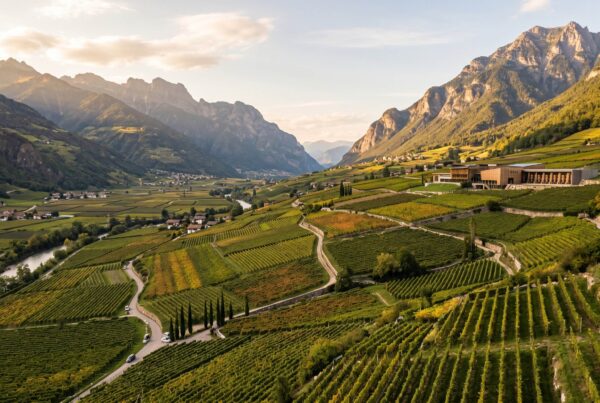
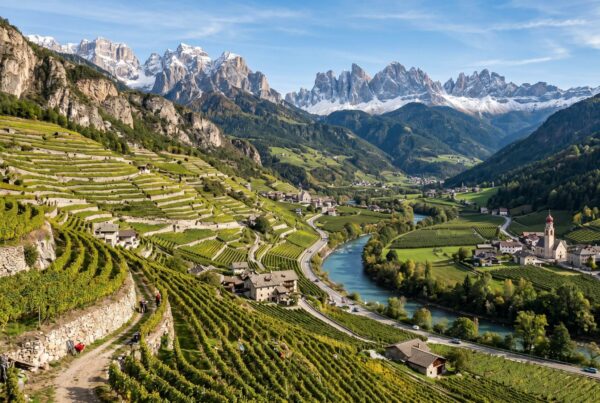
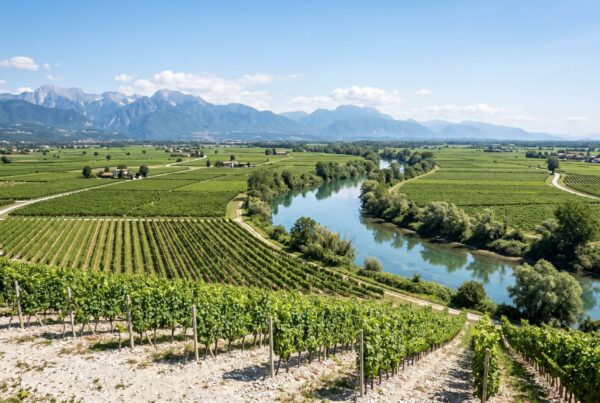
Even today, wine follows those same invisible lines.It is born primarily in the temperate zones of the planet, where the seasons allow the vine to find its natural rhythm. Yet within those bands, nothing is uniform. Climates change, soils shift, altitudes rise and fall, and hands cultivate differently. That is whythe world’s wine is never just one wine, but a constellation of places.To read it is to orient oneself. To understand where a bottle comes from, the climate that shaped it, and the story it carries.Because every wine, before it is tasted, must first be listened to.

Phylloxera and the Reinvention of Wine
Distant Roots, Close Salvation
For centuries, European wine lived in a quiet equilibrium. Vines grew on the same hillsides, in the same valleys, often on the same plots passed down through generations. It was an ancient knowledge, almost unchanging, and few believed it could ever break.Yet it only took something microscopic.
At the end of the nineteenth century, an insect from America crossed the ocean along with imported plants. It wasphylloxera, a parasite that still exists today, and which for the first time began attacking the roots of European vines that had no natural defenses.
It fed in silence, leaving no immediate signs. The vines did not die suddenly. They weakened season after season, as ifthe soil itself had withdrawn its support.Within a few decades, vast portions of Europe’s vineyards disappeared. Hillsides were left bare, rural landscapes abandoned, families forced to give upa way of life that had once seemed eternal.
It was not only an agricultural crisis.It was a cultural one.For the first time, wine revealed its fragility, exposing how deeply it depended on a delicate balance.
The solution did not come from tradition, but from observation and study.An American scientist, Thomas Volney Munson, understood what would change the fate of wine forever. By studying North American wild vines, he realized that these plants had long coexisted with phylloxera without suffering its effects.Their roots were naturally resistant.
The idea that followed was simple and revolutionary. European vines, carriers of quality, identity, and tradition, could begrafted onto American rootstockscapable of surviving the parasite. It meant uniting two worlds that had previously stood apart. At the time, the gesture seemed almost sacrilegious.Yet it was precisely this act that saved European viticulture and, with it, wine as we know it.
Today, beneath most vineyards around the worldbeats an American heart.Even when a wine speaks of Italian hills, French slopes, or Spanish valleys, its roots often draw strength from genetic material that comes from far away.Unseen, yet essential.
Phylloxera marked the beginning of a new awareness. Wine was no longer only the child of a place, but alsoof shared knowledge.Techniques began to circulate, grape varieties to travel, experiences to merge. Wine became truly global not because it lost its identity,but because it learned how to adapt without forgetting who it was.
Perhaps this is why wine continues to resemble humanity so closely.It is fragile, yet resilient.It changes, it suffers, it transforms. And when it seems lost,it always finds a way to be reborn.
Join the conversation.
What does wine mean to you: place, memory, culture, or transformation?
Share your thoughts with us in the comments on Instagram:@oratiowine