

Where the Sea Meets the Mountains
Some wine regions are shaped by broad plains.
Others are defined by gentle rolling hills.
And then there is Liguria, where every vineyard seems to challenge geography itself.
Here, the sea and the mountains are not separate worlds.
They exist within the same horizon.
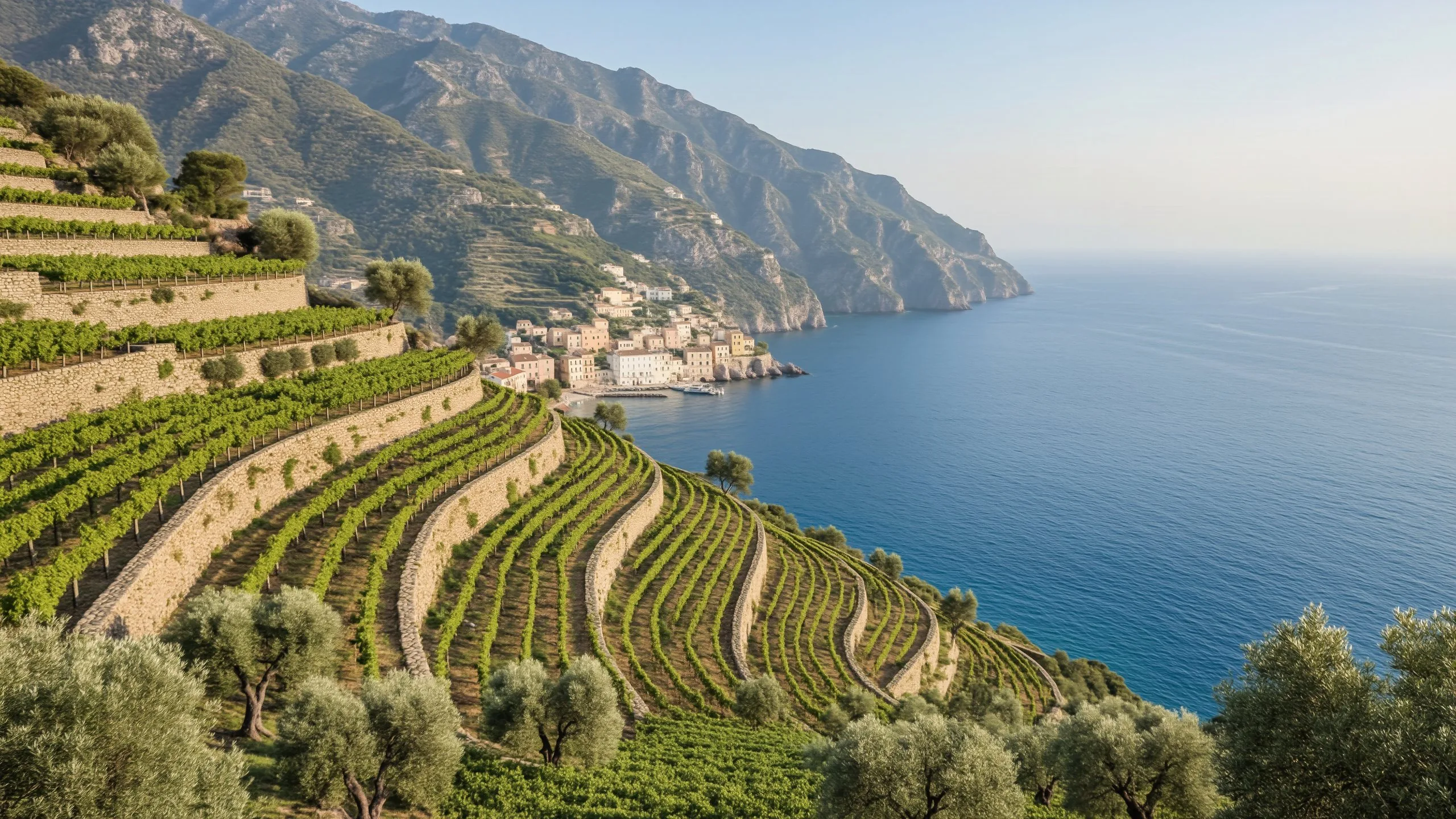
In just a few kilometres, the waters of the Ligurian Sea give way to steep slopes, stone terraces and tiny vineyards that appear to cling to the cliffs.
Growing vines in Liguria has never been easy.
Every row of vines has been carved from the mountainside.
Every harvest depends on skilled hands.
Every bottle reflects work that, elsewhere, would be entrusted to machines.
It is a form of viticulture built on patience.
On balance.
And on a profound respect for the landscape.
Liguria is not a region of vast production.
It is a land of small vineyards, native grape varieties and appellations that each tell a remarkably different story.
From the spectacular terraces of the Cinque Terre to the vineyards overlooking the western Riviera, every valley has found its own way of interpreting the relationship between the sea, the mountains and the vine.
Sea breezes keep the vineyards dry.
The mountains shelter them from harsher continental weather.
The soils change within only a few kilometres, giving rise to wines of extraordinary diversity.
Vermentino.
Pigato.
Rossese.
Bosco.
Albarola.
These are names that rarely dominate international wine guides.
Yet together they express one of Italy’s most distinctive wine identities.
In Liguria, wine is not produced despite the landscape.
It is born because of it.
For where the sea meets the mountains, the vine learns to find harmony in what seems impossible.
THE SEA AS TERROIR
The Influence You Cannot See
The sea never finds its way into the wine.
And yet, it is present in every glass produced along the Ligurian coast.
Its influence is constant, even when it remains invisible.
The breezes that rise from the harbours and rocky shoreline quickly dry the grape clusters after rainfall, naturally reducing the risk of disease and encouraging slow, balanced ripening.
During the summer, the sea tempers the hottest days.
In winter, it softens the cold.
This climatic balance allows the grapes to retain freshness, vibrant acidity and remarkable aromatic precision.
That is why so many Ligurian wines display delicate aromas, distinctive salinity and natural elegance.
It is not the sea that gives the wine its flavour.
It is the climate that quietly creates the conditions for the wine to express the place from which it comes.
A LAND BUILT STONE BY STONE
The Terraced Vineyards of Liguria
Looking down upon the Ligurian coastline, one detail immediately stands out.
The mountains seem to plunge directly into the sea.
There is almost no flat land left to cultivate.
And yet, for centuries, people have found a way.
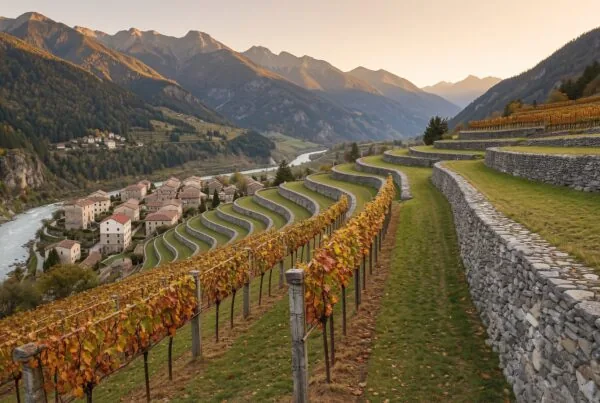
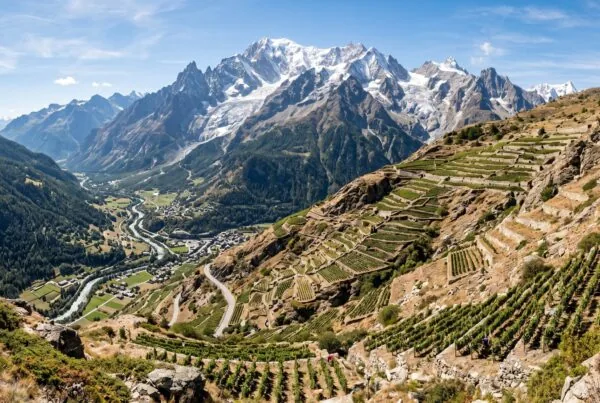
Thousands of kilometres of dry-stone walls support narrow terraces patiently carved into the steep slopes.
Every stone has been placed by hand.
Every small parcel of land has been won from the mountainside.
Without these terraces, much of Liguria’s viticulture simply would not exist.
They are far more than an achievement of rural engineering.
They are an essential part of the region’s landscape, culture and identity.
Walking through these vineyards reveals that the vine was never planted here because it was easy.
It was planted because it was the only place where it could be.
And perhaps that is the truest definition of Ligurian viticulture.
Not the pursuit of convenience.
But the determination to transform a challenging landscape into one of Europe’s most extraordinary wine regions.