

The Nebbiolo of volcanic soils
North of the Langhe, where the hills begin to draw closer to the Alps, the landscape changes in nature. It is no longer just a matter of shape, but of substance. The land becomes harder, older, more selective. This is whereGattinarais found.
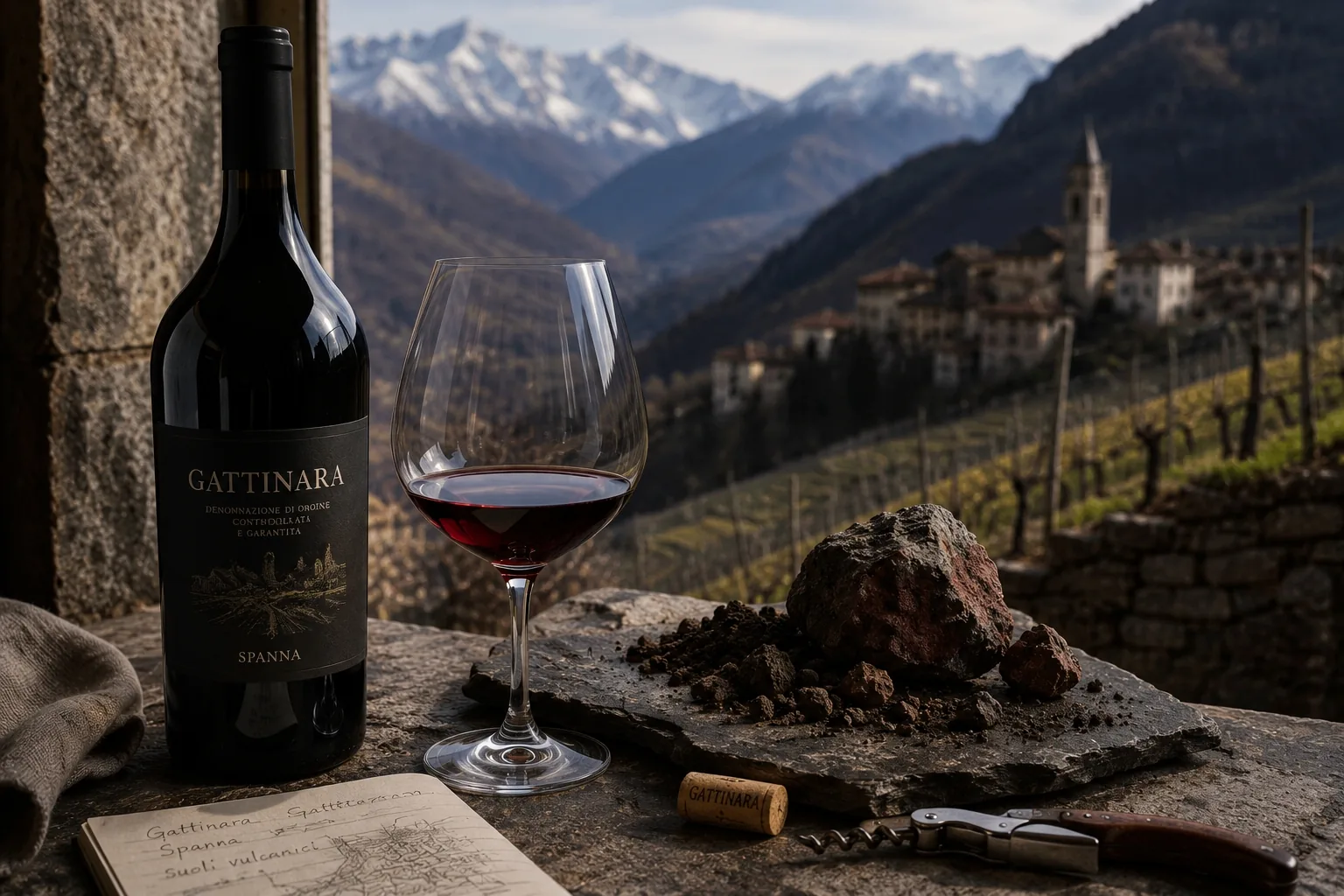
The soils here tell a different story from those of the Langhe. They are not soft, welcoming marls, but volcanic in origin, rich in minerals, poor in organic matter, often difficult to work. Porphyry, iron and acidic components make the land less fertile, yet extremely precise in the way it gives back to the wine.
The vine does not grow easily here. It must adapt. It must dig, search, restrain itself. This condition naturally reduces yield and concentrates the plant’s energy. It is not a stylistic choice, but a necessity imposed by the land.
In this setting,Gattinaratakes shape, one of the great wines ofAlto Piemonte. The main grape isNebbiolo, here known asSpanna. Alongside it, in small amounts, native varieties such as Vespolina and Uva Rara may appear. They do not change the identity of the wine, but accompany its balance, especially in more challenging vintages.
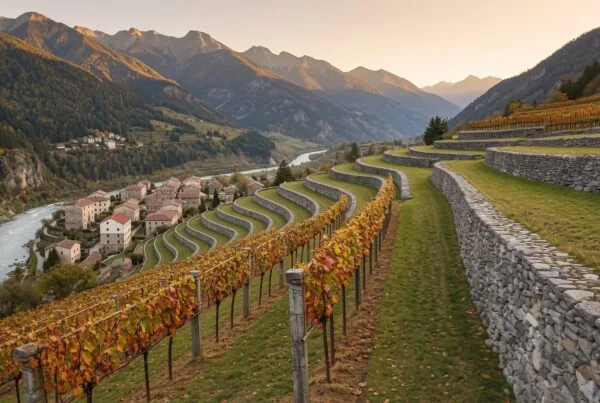
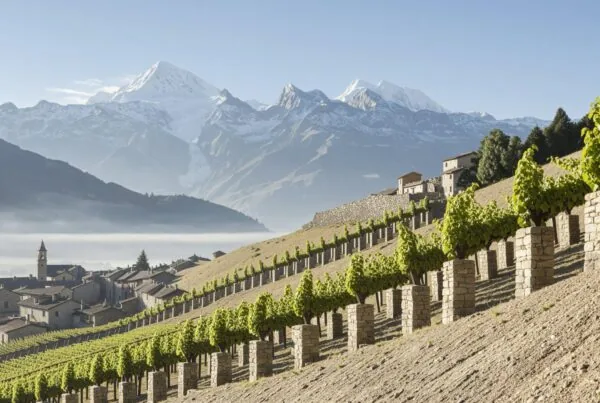
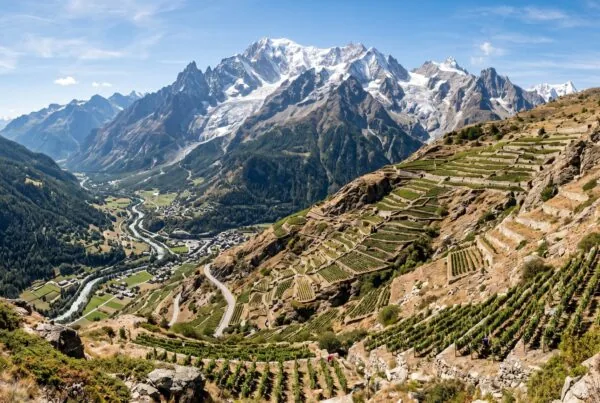
The landscape is fragmented, alternating vineyards with woods, open spaces and less domesticated land. There is none of the orderly continuity of the Langhe. And this is reflected in the wine, which becomes more sensitive, more reactive, less predictable.
Gattinarais not a place that softensNebbiolo. It tests it. And from this tension emerges a wine that does not seek volume, but direction.
The discipline of time
TheGattinaraDOCGregulations follow a logic that is deeply consistent with the territory. They do not impose unnecessary rigidity, but define the limits required to preserve identity and precision.
Nebbiolo, here calledSpanna, is the foundation of the wine and must be predominant. It may be supported by small percentages of Vespolina and Uva Rara, varieties that historically belong to this area and help maintain balance without altering the wine’s character.
Yields are kept low. Not to build power, but to avoid dispersion. In a territory that is already demanding, producing less means working better.
Time remains central.Gattinararequires a minimum ageing of 35 months, including at least 24 months in wood. The Riserva extends this to 47 months. These are significant periods, but not excessive. They are necessary to give structure to a wine without compromising its tension.
Wood, in this context, plays a discreet role. It does not shape the wine, but accompanies it. The raw material is less opulent than in the Langhe, and for this reason every intervention must be measured.
In the glass, the result is clear.Gattinaradoes not build depth through accumulation, but through extension. The wine develops vertically, with a precise, continuous line, without dispersion.
It is another idea of greatness. Less obvious, but deeply coherent.
Spanna or Nebbiolo
When the name changes, but the variety remains
InGattinara,Nebbiolois calledSpanna. A name that may suggest a different grape variety, but in reality tells another story.
Spannais the sameNebbiolofound in the Langhe. It is not a separate variety, nor a distinct officially recognised biotype. It is a local, historical name, rooted in tradition and usage.
Over time, the same grape has taken on different names depending on where it is grown. InValtellinait becomesChiavennasca, inAlto Piemonteit isSpanna. It is alwaysNebbiolo, interpreted in different contexts.
The differences perceived in the wine do not come from significant genetic variation, but from adaptation to place. Climate, soil, altitude and vineyard management deeply influence the final result.
This is whyNebbiolocan seem to change identity while remaining the same variety.
The local name is not an error or a simplification. It is a sign of belonging. It is the way a territory makes the grape its own.
Spannais not anotherNebbiolo. It is the Nebbiolo ofGattinara.