

Where wine changes surface
Leaving Piedmont and moving east, the landscape opens. The hills soften, the mountains step back or reflect themselves in water, and wine takes a different direction.
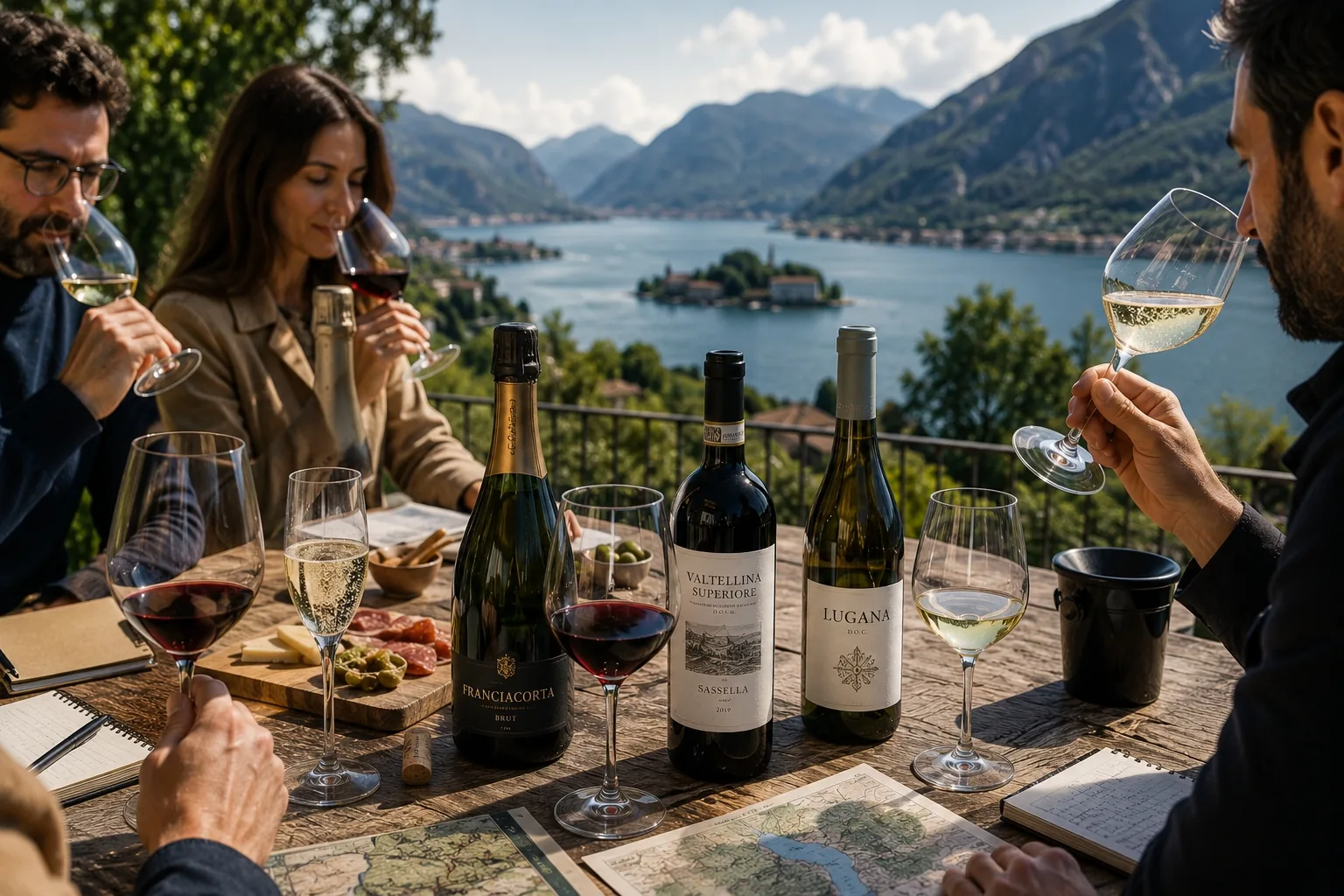
Lombardyis not a region that can be told through a single line. It is a territory that fragments, alternating plains and elevations, lakes and valleys, different climates within just a few kilometres. And for this reason, wine here does not follow a single voice.
To the north, the mountains return with strength. Vineyards cling to the slopes ofValtellina, whereNebbiolotakes on another form, adapting to an alpine climate and a vertical kind of viticulture.
A little further south, the landscape shifts again. The morainic hills around Lake Iseo give rise to one of the most refined expressions of Italian traditional method sparkling wine. Here, wine is not born from a single fermentation, but from a long process of waiting and precision.
And then there are the areas in between. The lands around LakeGarda, where the climate becomes milder, more open, more Mediterranean. The wines become more immediate, more luminous, without losing identity.
Lombardydoes not build its strength on a single dominant appellation. It builds it on diversity.
It is a region that cannot be reduced to a summary, but must be crossed.
And it is precisely in this movement that it finds its coherence.
Franciacorta
The precision of waiting
Between Brescia and Lake Iseo, on morainic hills shaped by ancient glaciers,Franciacortatakes form. A territory that seems built for precision.
Here, wine is not measured at harvest, but in the time that follows. The traditional method requires slow, controlled steps, invisible to the outside eye. Secondary fermentation in bottle, ageing on lees, waiting that cannot be rushed.
The regulations are among the most rigorous in Italy. They define minimum ageing periods starting from 18 months on lees for non-vintage wines, and extending beyond 60 months for the riserva versions. It is not only a technical matter. It is a choice of identity.
The main grapes are Chardonnay, Pinot Noir and, to a lesser extent, Pinot Blanc. Varieties that here find a balance between freshness and structure.
In the glass,Franciacortadoes not seek immediate impact. It works through continuity. The bubble is fine, never aggressive. The palate is precise, supported by a texture that builds slowly.
It is a wine that does not impose itself. It unfolds.
Valtellina
Nebbiolo reaching for the light
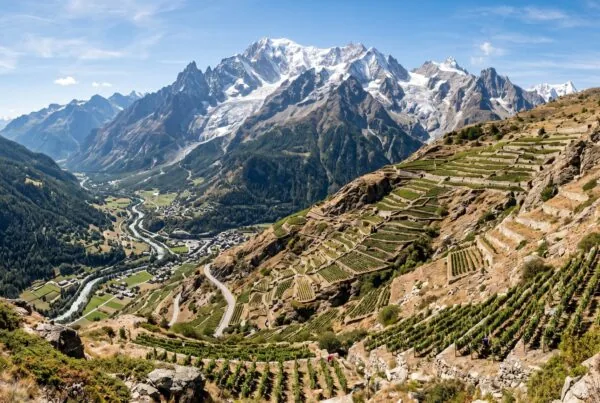
In the north ofLombardy, set within the Alps,Valtellinais one of the most extreme wine regions in Italy.
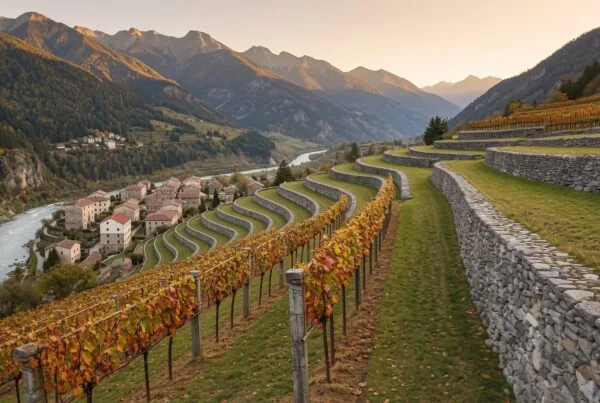
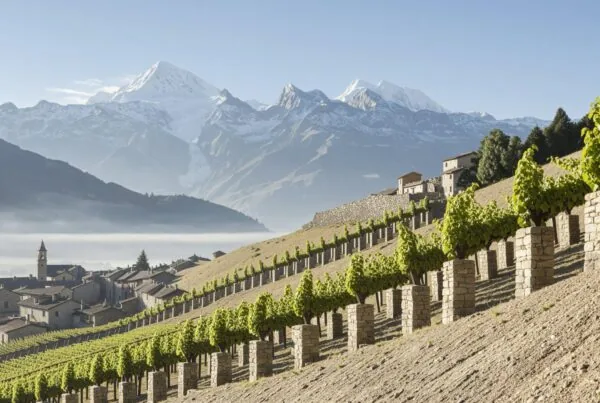
The vineyards climb along terraces supported by dry stone walls, facing south to capture every possible ray of sunlight. The valley runs from east to west, creating a unique balance between sun exposure and ventilation.
HereNebbiolotakes the nameChiavennasca. The grape does not change, but its expression does.
The alpine climate slows ripening. Temperature shifts are strong, acidity remains high, structure becomes lighter. The wine does not seek power. It works through tension.
In the glass,Valtellinais precision. The palate is sharp, continuous, often longer than it is wide. It does not expand. It extends.
It is aNebbiolothat does not raise its voice. But it remains.
Garda
When light becomes wine
Moving south, the landscape shifts once again. The water of the great lakes moderates the climate, reflects light and creates a more open environment.
Around LakeGarda, wine loses alpine tension and gains immediacy. Temperatures are milder, temperature swings less pronounced, ripening more regular.
Here, wines speak a different language. More direct, more luminous. They do not seek depth through structure, but through balance.
The grape varieties are diverse, but what unites them is their ability to adapt to a softer climate. The wines become more approachable, but not trivial.
Gardais the place where wine begins to breathe with ease again.