

Piedmont: Where Wine Learns Time
A Land Shaped by Restraint
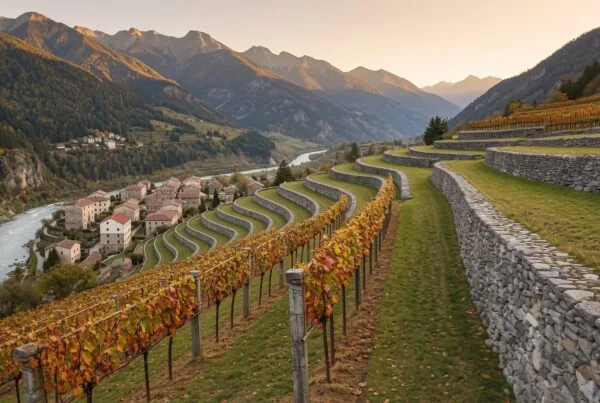
In Piedmont, wine always arrives a moment later. After the sun, after summer, after the urge to explain it. This is a land that does not rush, that does not chase. Seasons settle one upon another, and the vine grows within a rhythm that allows no shortcuts. Hills do not seek spectacle, vineyards do not demand attention. Everything happens with restraint, as if the landscape had learned to hold on to what elsewhere passes too quickly.
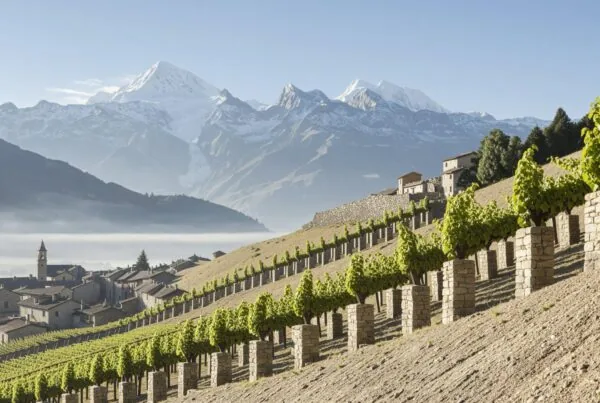
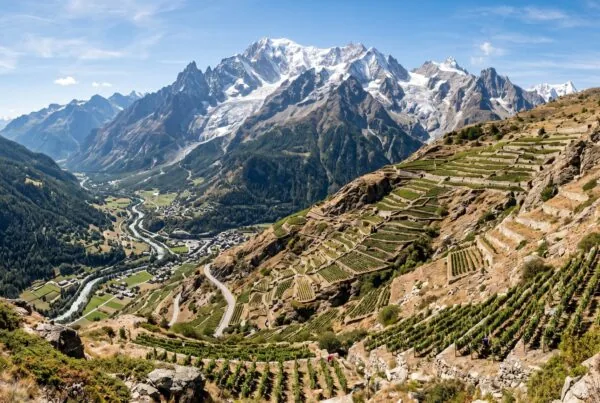
Geography shapes this character. The Alps close the horizon and protect, the plain gathers, the hills modulate light and air. Temperatures shift subtly, nights remain cool even in summer, and autumn never arrives abruptly. It slides in slowly, extending ripening and turning harvest into an exercise in precision.
Piedmontese wine is born this way: not as an immediate statement, but as a consequence. A consequence of a climate that demands patience, of soils that require attention, of harvests that refuse haste. It is a wine that does not seek impact, but coherence. Not built to impress, but to endure.
To think of Piedmont as a single entity would be a mistake. It is a system of dialogues. The Langhe, with their ancient marls capable of storing and releasing complexity over time. The Roero, separated by the Tanaro, lighter, sandier, more agile in character. And Upper Piedmont, where altitude reshapes the voice of wine into tension and verticality.
This is not a region defined by fame, but by conviction. Piedmont became central to the wine world because it pushed a simple idea to its limit: place matters. Time matters. Wine can be an act of measure.
Nebbiolo: When Time Takes Shape
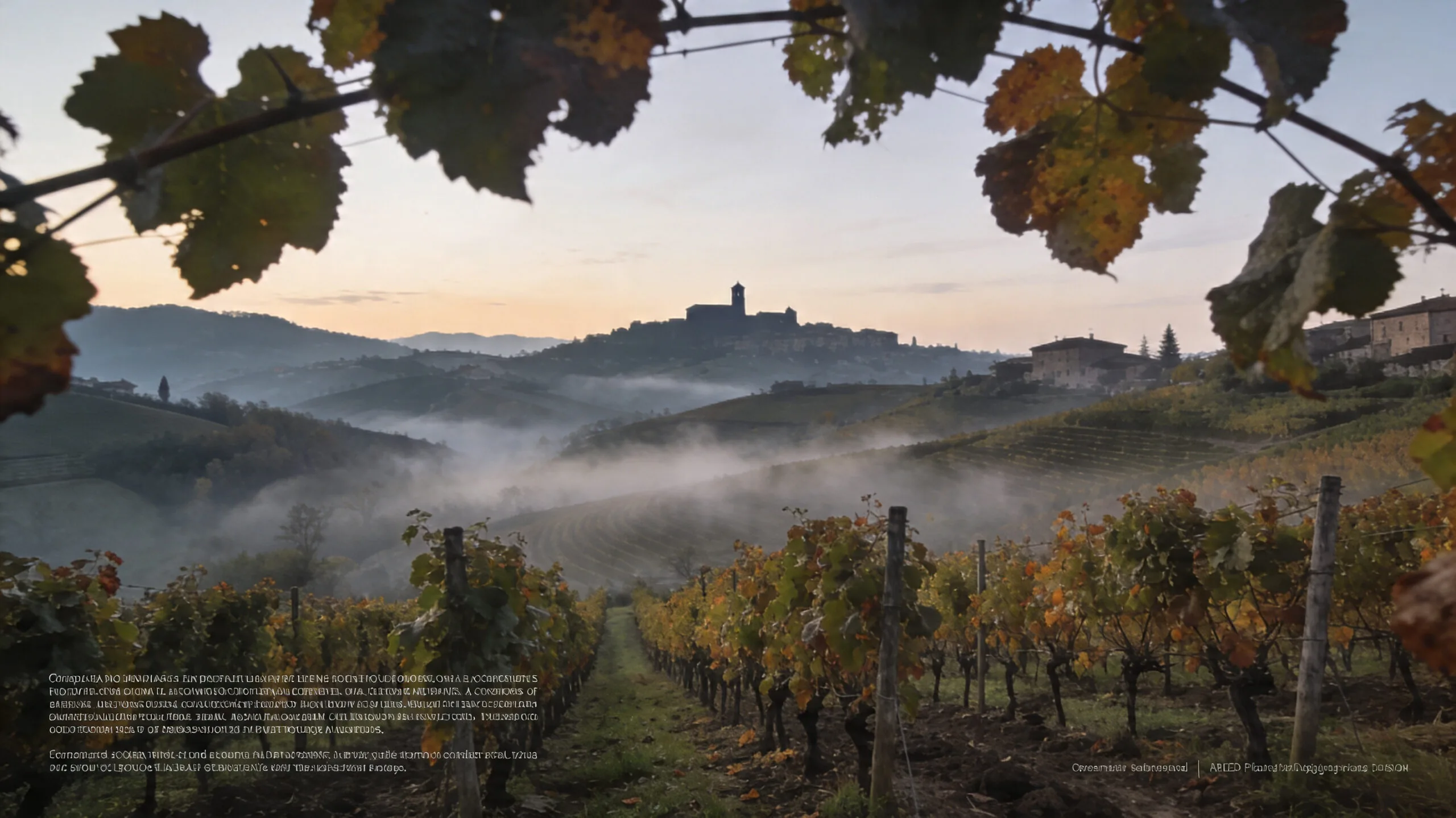
Nebbiolo seems to be born already wrapped in its landscape. Its name is traditionally linked to the autumn fog that slowly descends over Piedmont’s hills when harvest is still far from complete. Yet that fog is more than a weather pattern. It is an image. A sign of time stretching, of ripening that refuses to be rushed.
Others trace the name to the faint bloom that appears on fully ripe grapes, a subtle veil as if the fruit were holding its breath before harvest. In both readings, the message is the same: Nebbiolo does not tolerate haste. It ripens late, when summer has already passed and autumn has fully claimed the hills. It asks for light, exposure, and patience, offering complexity only to those willing to wait.
Its appearance can mislead. The color is often pale, betraying none of the depth beneath the surface. Tannins are firm, acidity is vivid, and structure is designed to support time rather than immediate impact. This is a wine that does not raise its voice, but remains. One that does not conquer instantly, but returns in memory with striking clarity.
Nebbiolo is also an exacting interpreter of place. It records every shift in soil, every change in exposure, every climatic nuance. More than many varieties, it transforms small differences into profound expressions. In Piedmont, it finds its natural language. Elsewhere, it can lose coherence. Here, it becomes meaning.
To understand Nebbiolo is to accept that greatness is not a matter of power, but of balance. And that time, when respected, can be wine’s greatest ally.
MGA: When Geography Becomes Language
In Tuscany, UGA helped us read Chianti Classico without turning it into a hierarchy. In Piedmont, the same desire for clarity takes another form: MGA, Additional Geographical Mentions. The name changes, the intention remains. Giving language to complexity.
MGA identify smaller areas within appellations, particularly Barolo and Barbaresco. They are not rankings, nor quality seals. They do not automatically make a wine better. They are maps. Tools to acknowledge that hills are never uniform, and that every variation in soil, exposure, and airflow leaves a trace in the glass.
The MGA system is remarkably detailed. Barolo counts over a hundred mentions, Barbaresco several dozen. Numbers that matter less as data than as meaning: here, territory is not background, it is structure. Geology plays a central role. Calcareous marls, compact clays, sandy layers coexist in close proximity, producing distinct expressions even when the grape remains the same.
In this context, the work of Alessandro Masnaghetti becomes essential. His maps of Piedmont’s MGA are not decorative. They are interpretive tools, helping readers visualize names, places, and relationships. They create a natural bridge with Tuscany, showing how different regions can share the same need for clarity while preserving their individuality.
MGA do not ask to be memorized. They ask to be observed. They invite us to read wine not as a uniform product, but as the result of a precise place, interpreted by a conscious hand. In Piedmont, more than elsewhere, geography does not merely influence wine. It becomes language.