

Where the mountains meet time
Some regions produce great wines.
Others have the rare ability to transform time into an essential ingredient.
Trento DOC belongs to the latter.
Born among the mountains of Trentino, it became the first Italian appellation dedicated exclusively to theTraditional Method, officially recognised in 1993. This designation celebrates not only a territory, but an entire philosophy of winemaking.
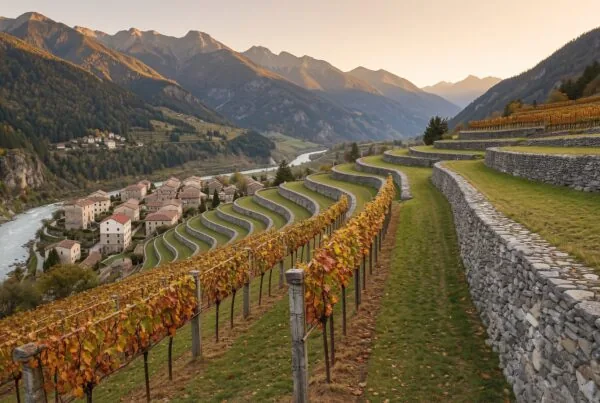
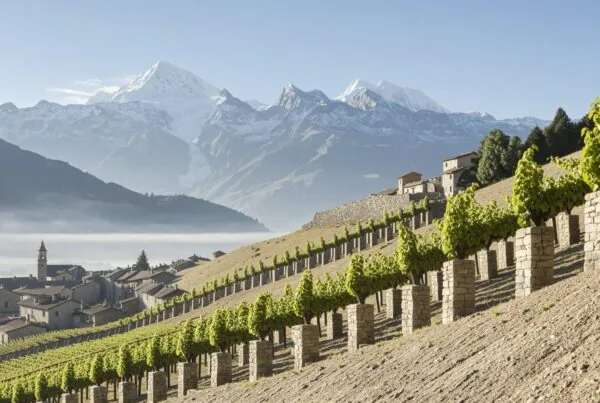
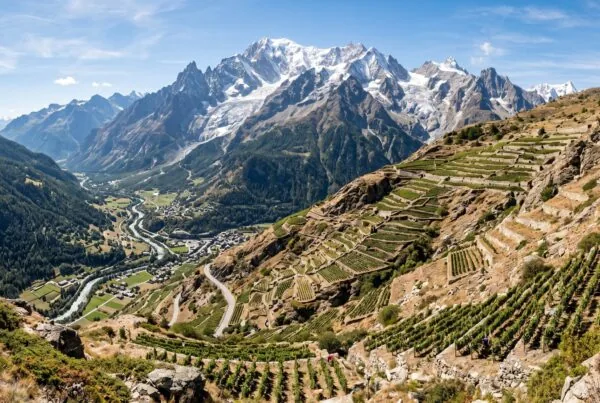
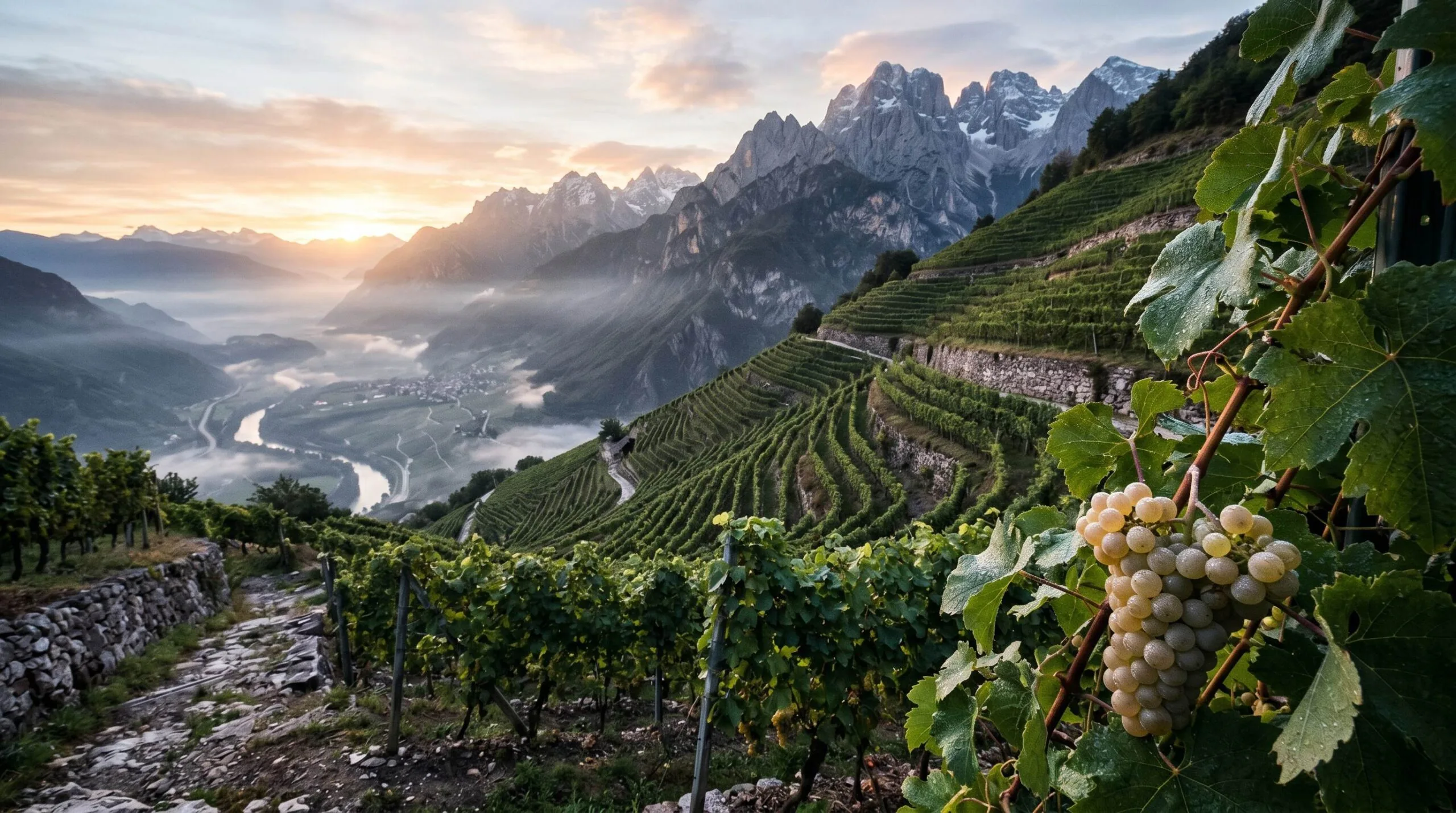
Here, vineyards stretch from around 200 to more than 900 metres above sea level, climbing the slopes of the Dolomites and the Adige Valley. Altitude, combined with dramatic day-to-night temperature swings, slows the ripening of the grapes, preserving freshness, elegance and remarkable aromatic precision.
These are precisely the conditions that make Trentino one of the world’s most naturally suited regions for producing Traditional Method sparkling wines.
TheTrento DOCdisciplinare allows only bottle fermentation and permits the use of four grape varieties:Chardonnay, Pinot Noir, Pinot Blanc and Meunier. Chardonnay is the dominant grape, expressing the freshness and elegance of the mountains with extraordinary finesse.
But it is time that truly defines these wines.
After the first fermentation, the base wine is bottled together with a mixture of yeast and sugar known as theliqueur de tirage, which triggers the second fermentation inside the bottle. It is during this process that the wine naturally develops its bubbles.
Once fermentation is complete, the wine remains in contact with its lees for an extended period. This stage, known aslees ageing, adds complexity, texture and the distinctive aromas of freshly baked bread, brioche, toasted hazelnuts and pastry.
The bottles are then slowly rotated during theremuage (riddling)process, allowing the yeast sediment to collect in the neck. Duringdisgorgement, the sediment is removed, and the wine is topped up with theliqueur d’expédition, which determines the final style, from Brut Nature to Demi-Sec.
The disciplinare requires extended ageing: at least15 monthsfor the standard version,24 monthsfor a Millesimato (vintage wine) and36 monthsfor a Riserva. Many producers, however, choose to age their wines considerably longer, allowing time to complete the work begun by the mountains.
Here, bubbles are never created in haste.
They are born from patience.
Every bottle tells the story of a mountain, a harvest and the quiet passage of time.
And it is this remarkable ability to transform altitude into elegance that has established Trento DOC as one of the world’s great sparkling wines.
CHAMPAGNE & TRENTO DOC
Two regions, one method
When discussing the world’s great sparkling wines, comparisons with Champagne are inevitable.
But it is important to begin with one fundamental distinction.
Champagneis a geographical appellation in France.
Traditional Methodis a winemaking technique.
Trento DOC and Champagne share the same production method: the second fermentation takes place inside the bottle, where the wine remains in contact with its lees for months—or often years—developing complexity, aromatic depth and an exceptionally fine mousse.
What differs is the land itself.
In Champagne, the wines are shaped by chalk soils, a cool maritime climate and centuries of history rooted in northeastern France.
In Trentino, it is the mountains, the Dolomites, the Alpine soils and the dramatic temperature variations that define the wine’s personality.
The grape varieties also reflect these differences. Both regions rely heavily on Chardonnay and Pinot Noir, but Trento DOC places far greater emphasis on Pinot Blanc, while Champagne traditionally blends Chardonnay, Pinot Noir and Meunier.
The result is not an imitation of Champagne.
It is a different expression of the same philosophy.
If Champagne tells the story of chalk, cool northern skies and centuries of French tradition, Trento DOC tells the story of the Italian mountains.
Two regions.
One method.
Two completely different identities.
And it is precisely those differences that make each of them extraordinary.
GIULIO FERRARI
The man who imagined an Italian dream
At the beginning of the twentieth century, many believed it was impossible for Italy to produce a sparkling wine capable of standing alongside France’s finest.
One man disagreed.
After studying in Champagne,Giulio Ferraribecame convinced that the mountains of Trentino possessed the ideal conditions for producing exceptional bottle-fermented sparkling wines. Returning home, he planted Chardonnay—virtually unknown in the region at the time—believing that this grape had found a new home among the Dolomites.
It was a bold decision.
To many, it seemed almost impossible.
Yet time proved him right.
His vision transformed the future of Italian sparkling wine.
His work did more than establish one of Italy’s most prestigious wineries.
It laid the foundations for an entirely new culture of Traditional Method winemaking, helping build the international reputation that Trento DOC enjoys today.
His legacy lives far beyond the bottles that bear his name.
It lives in the belief that a great wine region does not need to imitate anyone else to achieve excellence.
Because the world’s greatest wines are not born by trying to become something else.
They are born when they learn to express their own identity.