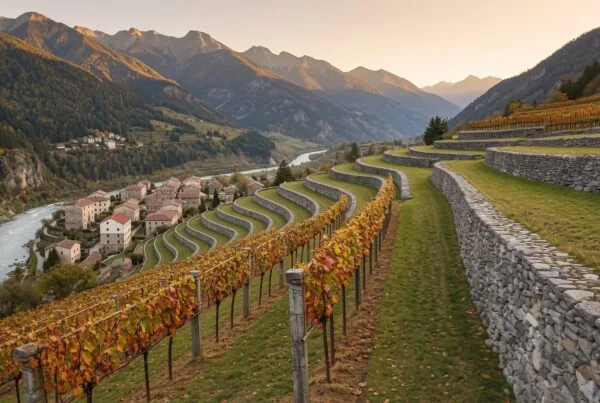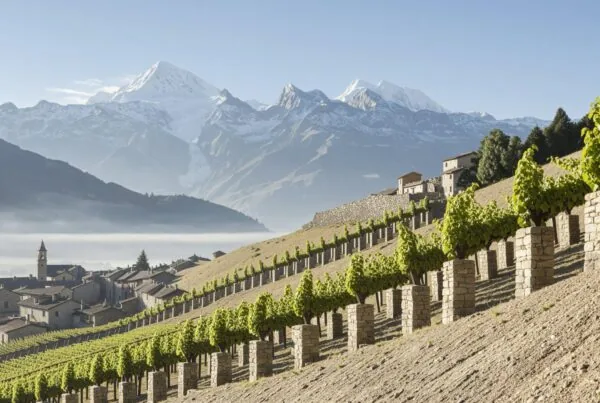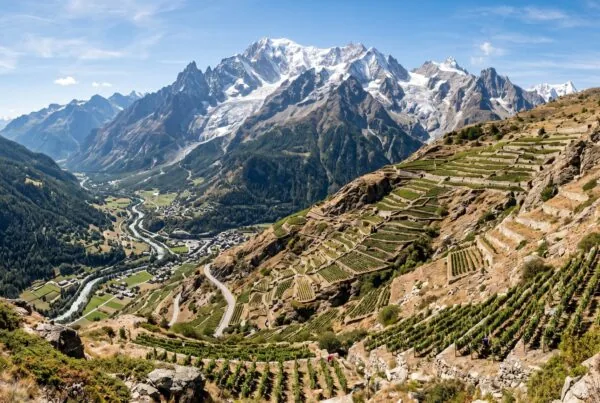



Where wine multiplies
If Lombardy fragments,Venetoexpands.
It is a region that does not follow a single line, but contains many.
From LakeGardato the Dolomites, from the hills ofValpolicellato the plains opening toward the sea, the landscape is in constant transition. And with it, the wine changes.
Here, production does not concentrate. It spreads.
Venetois one of the most productive regions in Italy, but reducing it to numbers means missing the point.
Alongside large volumes, there is surprising precision. Alongside immediate wines, there are some of the most structured and long-lived expressions in the Italian landscape.
It is a region that operates on multiple levels at once.
To the west, in the hills that look toward Verona, wine is built on substance. Red grapes find concentration, structure and depth.
Moving north-east, the landscape opens. The hills soften, the climate lightens, and wine changes pace. Freshness takes the place of structure, immediacy replaces tension.
And then there is the plain. A vast territory, often invisible in the narrative of wine, yet essential to understanding its scale, its reach, its accessibility.
Venetois not a region to summarise.
It is a region to cross.
And it is precisely in this constant movement that it finds its identity.
Valpolicella
Where wine takes shape
In the western part ofVeneto, between Verona and the first foothills of the Prealps,Valpolicellarepresents one of the most important centres of red wine production in Italy.
The landscape here is made of gentle hills, favourable exposures and calcareous soils that allow grapes to ripen with balance.
The main varieties are Corvina, Corvinone and Rondinella. Grapes that, on their own, do not seek extreme power, but together build a precise structure capable of evolving over time.
The wine is born from a delicate balance: freshness, structure, drinkability. But it is also here that one of the most significant techniques ofVenetotakes form.
Drying.
A practice that does not belong only toAmarone, but emerges as a response to the territory, to the climate, to the need to concentrate what nature distributes.
Valpolicellais the starting point.
But also the point of transformation.
Prosecco
Where wine becomes movement
Moving toward the north-east, between the hills of Conegliano and Valdobbiadene, the landscape shifts again.
The slopes become gentler, the vegetation more open, the climate fresher. Here, wine leaves structure behind and moves in a different direction.
Proseccois made fromGleragrapes and develops through theCharmat Method, which favours freshness and immediacy.
But reducing it to a simple wine would be a mistake.
Behind its apparent lightness lies significant technical precision. Fermentation management, pressure control and the ability to preserve primary aromas are all central elements.
In the glass,Proseccois rhythm.
It is a wine that does not stop, that accompanies, that adapts.
IfValpolicellabuilds,Proseccoflows.
And it is precisely in this contrast thatVenetodefines itself.