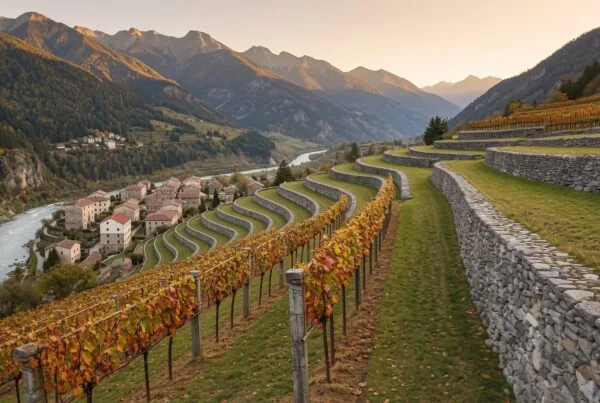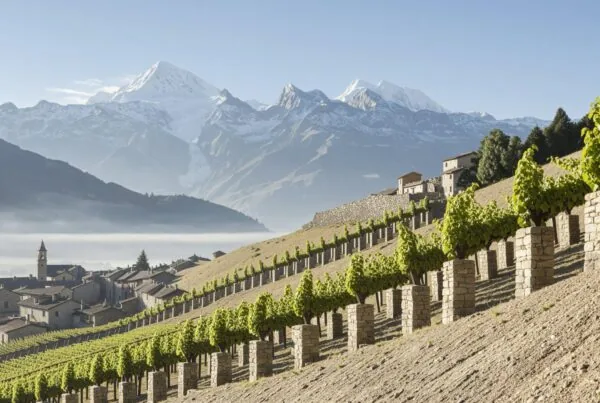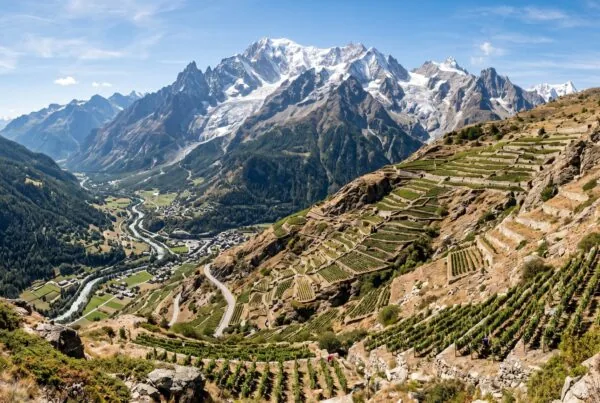

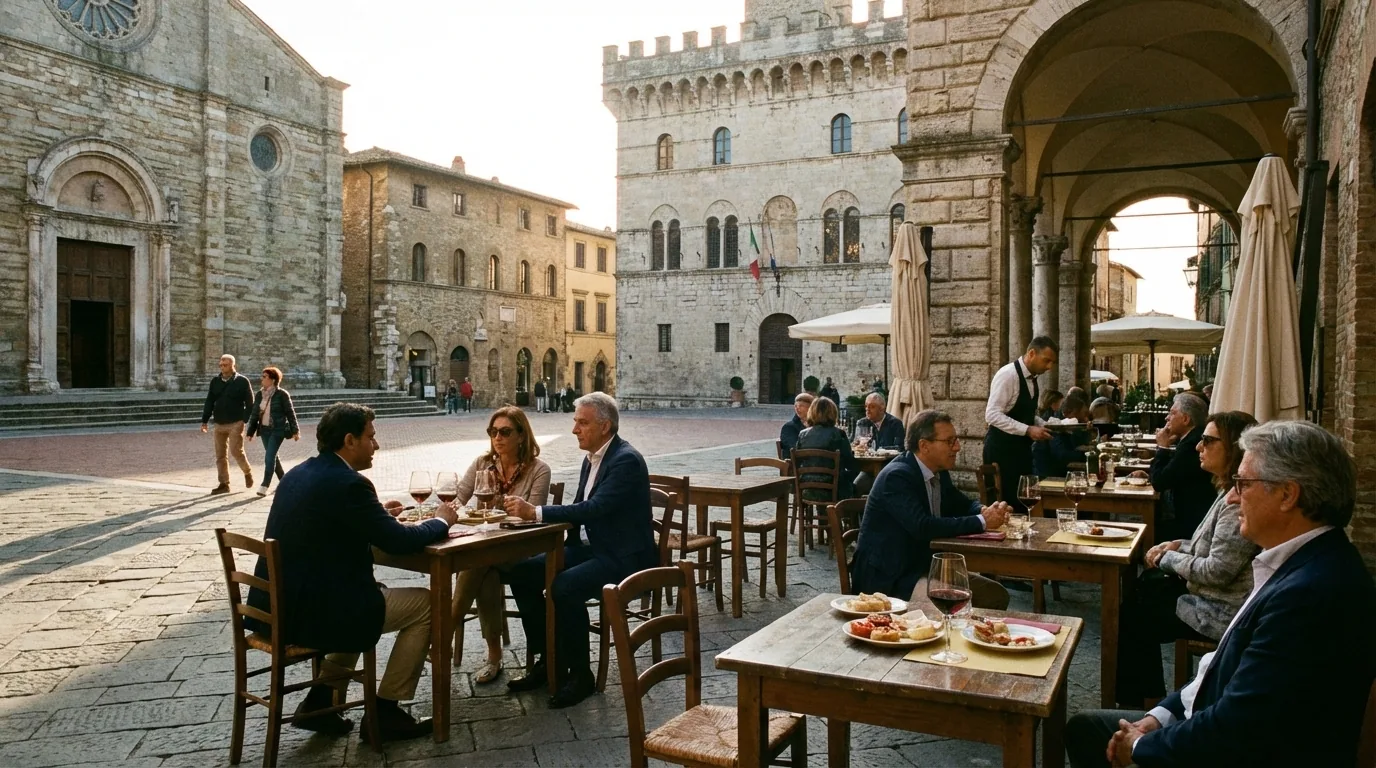

There are hills that do not seek attention. They prefer continuity over spectacle, letting time do its quiet work. Montepulciano is one of these places. Set along a ridge between the Val di Chiana and the Val d’Orcia, insoutheastern Tuscany, the town looks out over the landscape with an ancient calm. It is not far from the sea, yet it is not ruled by it. High enough to breathe cooler air, open enough to gather light, Montepulciano lives ina state of natural balance.
The appellation of Montepulciano coincides with the municipal territory and the surrounding hills. Vineyards stretch from roughly 250 to 600 meters above sea level, with varied exposures that allow grapes to ripen gradually, never under pressure. The soils alternate betweenclay, sand and calcareous deposits, giving the vine a complexity that translates into wines marked byharmony and continuity rather than extremes.
Climate is one of this area’s greatest allies. Summers are warm but moderated by altitude, while cool nights preserve freshness and aromatic clarity. Seasons follow one another with reassuring regularity. Here,the vine is not challenged by violent contrasts. It is guided.
The production rules ofVino Nobile di Montepulcianoreflect this philosophy of measure. The backbone of the wine isPrugnolo Gentile, the local biotype of Sangiovese, which must make up at least seventy percent of the blend. The remaining thirty percent may include other traditional Tuscan varieties and, in limited proportions, approved international grapes.This is not a search for absolute purity, but for balance.
Yield regulations speak the same language. Maximum yields per hectare and controlled grape-to-wine conversion are designed to prevent natural generosity from turning into dilution. Quality here is not achieved through radical restriction, but throughattentive, ongoing vineyard management.
Time is, as always in Tuscany, part of the equation. Vino Nobile di Montepulciano must age for a minimum of two years before release, part of which is spent in wood. Riserva requires a longer period. The regulations do not impose a specific barrel size, leaving producers free to interpret aging according to their vision.The rules define the boundaries. Character is shaped by human choice.
The result is a style that avoids extremes. Vino Nobile does not seek sheer power, nor austere minimalism.It seeks equilibrium.It is a wine that evolves with time, yet does not demand decades to express itself.Deep without severity, complex without obscurity.
Montepulciano, in this sense, represents one of Tuscany’s most complete expressions. A territory that does not need to declare its identity loudly, because its strength lies incoherence. Wine here is not a manifesto.It is a steady presence.
For a wider view of where Vino Nobile di Montepulciano sits within the region’s wine identity, readour guide to Tuscan wineregions, grapes and stories. It places Montepulciano alongside Chianti Classico, Brunello di Montalcino and Bolgheri, showing how altitude, soil, Sangiovese biotypes and local tradition shape some of the most distinctive wines in Tuscany.
Vino Nobile: The Weight of a Word and the Responsibility of History
The word“Nobile”has never been light. Applied to a wine, it carries expectations, memory and responsibility. In Montepulciano, this name is neither a modern invention nor a marketing construct. It reflectsa historical rolethe wine has played for centuries.
As early as the Renaissance, wines from the hills of Montepulciano were appreciated in aristocratic circles and noble courts. They were selected wines, destined for refined consumption rather than widespread trade. The term“Nobile”originally described this destination before it defined a precise style.
As wine commerce expanded and names began to travel, this reputation required protection. The recognition ofVino Nobile di Montepulciano as a DOCG in 1980formalized an identity that already existed in practice and collective perception. It was one of the first Italian wines to receive this status, confirming itshistorical and cultural importance.
Calling a wine“Nobile”does not imply superiority.It implies responsibility.This is why the production rules insist on balance, continuity and the ability to age gracefully without losing composure.
Prugnolo Gentile, the heart of the wine, embodies this philosophy. It is not exuberant, nor immediately assertive. It works throughtannin finesse, aromatic progression and an innate ability to accompany food rather than dominate it.
The use of oak follows the same logic. Barrels are not tools of assertion, but of integration.Wood gives structure without imprinting a signature.Each producer interprets this phase differently, always within a shared framework of restraint.
Vino Nobile di Montepulciano has never tried to compete through sheer power. It has chosencredibility over time.It is a wine that tells the same story again and again, knowing that each vintage adds a new inflection while preserving a recognizable line.
In a wine world that often confuses intensity with depth, the word“Nobile”gains renewed meaning. It does not indicate privilege, but commitment. A commitment toan idea of elegance that does not fade, because it is rooted in respect for place and dialogue with time.