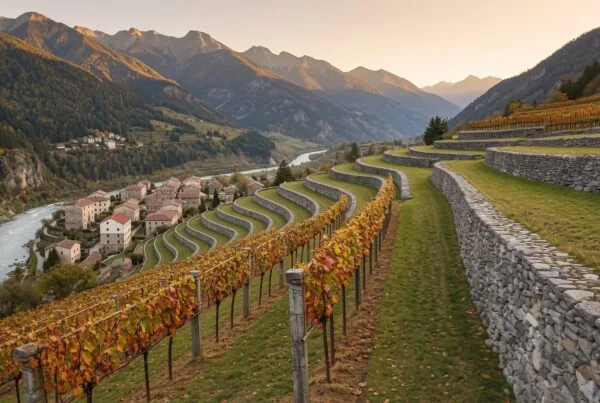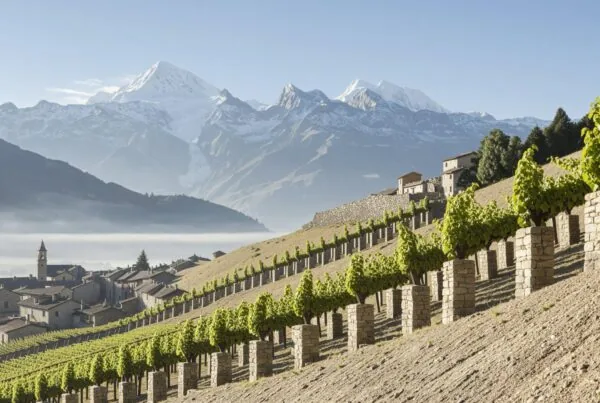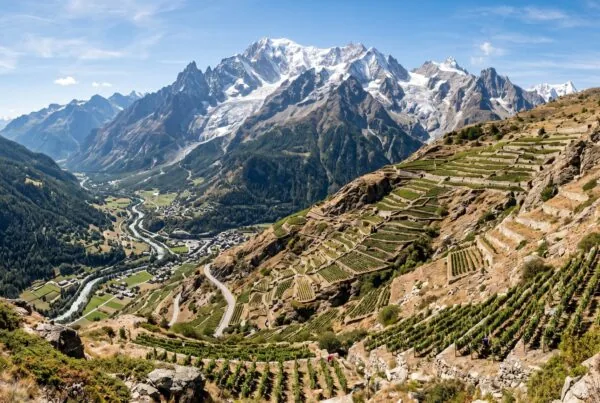



Tuscany produces wine the way it produces everything else — with an almost uncomfortable confidence that what the land gives is worth paying attention to. Over centuries, this part of central Italy has turneda specific geography into a recognisable way of thinking about wine: one where the grape follows the terrain, the cellar follows the vintage, and the producer follows the vine. That is why, when you pick up a bottle ofTuscan wine, you are not just choosing a style. You are choosing a place.
The region runs from the Apennines in the north down to the Tyrrhenian coast, taking in the valleys of the Arno and the Chiana, the volcanic hills of the south, the ridges of the Sienese countryside. Within that geography, the diversity is real and significant — in altitude, in soil type, in climate, in the distance from the sea. What holds it together is less a shared aesthetic than ashared seriousnessabout origin.
This article covers four of the appellations that best explain what Tuscan wine has become and why the world keeps coming back to it:Chianti Classico,Brunello di Montalcino,Vino Nobile di MontepulcianoandBolgheri. Each one is a distinct argument about what wine can be when the starting point is an honest reading of the land.
Chianti Classico: When a Place Becomes an Idea
The hills betweenFlorenceandSienahave been planted with vines for long enough that separating the wine from the landscape has stopped making much sense.Chianti Classicois not a denomination built on marketing. It is a place — rolling hills, broken forest, white roads, old stone — that over time learned to recognise itself through what it grows.
The grape at its centre isSangiovese, which by regulation accounts for at least 80% of every bottle. But Sangiovese is not a simple or uniform grape, and Chianti Classico is not a simple or uniform territory. InGreve in Chianti, the northward exposures and gentler soils pull the wine toward roundness. InRadda, altitude and a slower growing season produce wines that are tighter, more vertical, longer on the finish. InGaioleandCastellina, the soils get poorer and the structure harder-won. These differences have been part of the conversation here for generations — and in recent years, the denomination has formalised them through theUnità Geografiche Aggiuntive (UGAs), sub-zones designed to give buyers a more precise map of what they are drinking and where it comes from.
The symbol of Chianti Classico is theBlack Rooster — the Gallo Nero— and its origin is a story rather than a document. Medieval Florence and Siena, chronic rivals, agreed to settle a border dispute with a race. Two riders would set off at cockcrow, one from each city, and meet in the middle. Florence chose a black rooster, kept hungry and in the dark. Siena chose a white one, fed and comfortable. The black rooster crowed well before dawn. The Florentine rider covered far more ground before the two met near Castellina in Chianti, and the boundary was drawn there. The story probably isn’t true. It survives because it captures something real about the place: that the border of Chianti Classico is not just geography, it is memory and identity carried forward in a bottle.
→ Read more:Chianti Classico: terroir, UGAs and the identity of Tuscan wine
Brunello di Montalcino: A Wine That Takes the Time It Needs
Go further south, past the hills of Chianti, and the landscape gradually opens. The horizon broadens, the light becomes sharper and more direct, and the air carries a dryness that feels different from anything further north.Montalcinorises here as a single hill above the Val d’Orcia, enclosed on most sides by rivers and ridges, withMount Amiataacting as a backstop against the worst weather from the south. The Tyrrhenian coast is around a hundred kilometres away, close enough for its dry breezes to matter.
The appellation sits exactly within the town’s municipal limits — one commune, nothing added, nothing stretched. Producers here have always preferred a tight definition over a larger one, and that instinct shows in how seriously the production rules are written.Brunello di Montalcinois made exclusively fromSangiovese Grosso, the local selection of the variety that in Montalcino has historically been called Brunello. What makes it distinct is its capacity to age for decades without collapsing — to carry tannin and acid through time while gradually building a complexity that younger vintages only hint at.
The numbers in the disciplinare are deliberate. Maximum yield:8 tonnes per hectare. Minimum time before release:five years from harvest, six for the Riserva. At least24 months in oak, though the rules say nothing about barrel size — which means the choice between large Slavonian casks and small barriques is left to the producer, and accounts for much of the variation you find between houses. Concentration comes from the vineyard. Character comes from the choices made in the cellar. Neither alone is enough.
When Brunello is ready — and it is never in a hurry — what you find in the glass tends toward earth and iron rather than fruit, toward mineral tension rather than richness. These are winesbuilt to last, and they make most sense when treated accordingly.
→ Read more:Montalcino and Brunello: Territory, Sangiovese and the Meaning of Time
Vino Nobile di Montepulciano: The Quiet Appellation
There is a kind of wine territory that does not announce itself.Montepulcianois one of them. The hilltop town sits on a ridge between theVal di Chianaand theVal d’Orciain the southeast of the region, at an altitude that keeps summers manageable and gives the nights a coolness that many lower-lying areas lack. The vineyards run from roughly 250 to 600 metres, planted in a mix ofclay, sand and calcareous soilthat varies enough within the appellation to produce wines with real internal diversity, even under the same name.
The local selection of Sangiovese grown here is calledPrugnolo Gentile, and it forms at least 70% of every bottle ofVino Nobile di Montepulciano. The balance can come from other traditional Tuscan varieties or, within limits, approved international grapes. The minimum aging before release is two years, with a portion in wood; the Riserva goes longer. As in Montalcino, barrel size is the producer’s call — which keeps the stylistic range wide and the conversation open.
What tends to come through in the best bottles here is a particular kind oftextural refinement— less austere than Brunello at its most classical, less immediately assertive than some Chianti Classico. The tannins are present but polished. The fruit is there but doesn’t push. These wines reward patience, and they tend to be more food-friendly across a wider range of dishes than their better-known Sienese neighbour. Montepulciano doesn’t shout. It waits to be noticed.
→ Read more:Montepulciano and Vino Nobile: Tuscan Balance, Prugnolo Gentile and Time
Bolgheri: The Coast That Changed the Conversation
Everything discussed so far sits in the inland hills.Bolgheriis something else entirely. It lies on theTyrrhenian coast, in the territory of Castagneto Carducci, where the land is flat and warm and the sea — even when you can’t see it — does most of the climate management. Sandy, alluvial soils rich in marine sediment. Hot summers that the constant coastal wind keeps from tipping into excess. Mild winters. A ripening season that runs long and steady without drama.
For a long time, nobody thought this was the right terrain for serious wine. The territory looked agricultural, even anonymous. ThenMario Incisa della RocchettaplantedCabernet Sauvignonon his estate in the 1940s — not because he was trying to found a movement, but because he admired what they did in Bordeaux and wanted to try it at home. For years, the wine was made for the family. When it finally reached the market in the 1970s, under the nameSassicaia, critics had to recalibrate. A wine from a coastal Tuscan plain was outperforming things that had been considered untouchable. TheSuper Tuscancategory was born from that reappraisal, and Bolgheri was its home.
TheBolgheri DOC, established in 1992, codified what the wines had already demonstrated. International varieties —Cabernet Sauvignon, Cabernet Franc, Merlot, Syrah— are central to most bottlings, occasionally blended with local grapes. Oak is used as a structural element, not as flavour. The wines tend toward density and length, with a coastal freshness running underneath the weight. They are confident wines from a territory that earned its reputation by being ignored first.
→ Read more:Bolgheri: When the Plain Looked to the Sea and Changed Tuscan Wine
Sangiovese: One Grape, Many Faces
Three of the four appellations above are built aroundSangiovese, and yet the wines taste nothing alike. That says something important about the grape. Sangiovese isunusually sensitive to where it grows: to altitude, to soil, to how the producer manages it in the vineyard and the cellar. The Sangiovese Grosso of Montalcino, ripening slowly at altitude above the Val d’Orcia, produces a wine of iron and dried herbs and mineral tension. The Prugnolo Gentile of Montepulciano, shaped by clay and a more moderate climate, leans toward texture and restraint. The Sangiovese of Radda in Chianti, grown high and cooled by altitude, yields something nervous and vertical.
High natural acidity. Firm tannin. A core that tends toward earth and leather before fruit. These are the structural constants. What varies is everything built on top of them — and that variation is precisely what makes following Sangiovese across Tuscany worth doing. The same grape, the same rules, andwines that don’t overlap.
Tasting Tuscan Wine at Oratio
Reading about wine territories is one thing. Tasting them side by side is another. AtOratio Wine Bar & Libraryin Florence, the selection is built around exactly this kind of comparative understanding — bottles chosen not just for quality but for what they show about the place they come from. Chianti Classico and Brunello sit alongside Vino Nobile and Bolgheri, and the people pouring them know the difference between a Gaiole and a Radda, between a traditional cask-aged Brunello and a more modern interpretation.
The full selection is in theWine List. For a more structured experience, theWine Tasting sessionstake you through the key distinctions between appellations, grape biotypes and production styles — useful whether you are new to Tuscan wine or have been drinking it for years and want to sharpen your reading of it.
Why Tuscan Wine Still Has Things to Say
Tuscan wine is not a static subject. Chianti Classico is still working out how to communicate the differences between its sub-zones. The debate between traditional and modern Brunello has not been resolved, and probably shouldn’t be. Montepulciano is quietly building a case for more serious attention. And Bolgheri keeps demonstrating that a territory with no ancient precedent can still produce wines with a clear and specific identity.
What connects all four is something harder to put into a regulation: agenuine relationship between producers and the land they work. Not ideology. Not trend-chasing. The kind of attention that comes from farming the same ground across generations, or from arriving somewhere new and choosing to listen before you do anything else. The best Tuscan wines carry that attention in them. You can taste it in the tension between acidity and structure, in the way the finish extends without pushing, in the way a wine opens over an hour in the glass rather than giving everything immediately.
That is why people keep coming back toTuscan wine— not just because it is good, but because there is always something more to understand about it.